
If we asked people what makes them lose weight, most would answer similarly: a healthy diet, exercise, and maybe a little determination. However, science today whispers a different, much deeper truth — the transformation of the body begins not in the gym or at the kitchen table, but when we close our eyes and fall asleep.
Metabolism, that invisible internal engine that burns, boils and constantly works inside us, is one of the most sensitive processes in the body. When it works in harmony, we feel light, energetic, ready to move. When it is disturbed by stress, lack of sleep or chaotic habits, the body starts to malfunction — fatigue accumulates, we feel worse, and weight starts to increase even when we eat “as usual”.
And here is where the first great truth of this article is discovered: sleep is one of the most important factors in weight regulation . Not a supplement, not a diet, and not a strict schedule — but the simplest, yet most profoundly effective sleep.
When we sleep too little, our bodies start to rebel
A short night's sleep — four, five, or six hours — seems like nothing, at least in the first few days. But the body reacts to it as if it were in crisis. The ability to regulate appetite decreases, and the brain, lacking energy, sends one clear signal: "give me something sweet."
The need for sugar and carbohydrates becomes stronger, portions are larger, and satiety comes later. If we repeat this regime for a week, a month, or longer, the effect becomes inevitable: growing fat, especially around the internal organs, and sluggishness, which makes physical activity increasingly difficult.
Meanwhile, when you sleep poorly, your body starts burning muscle instead of fat — our most precious energy source. This is one of the biggest reasons why people on diets sometimes feel weaker and don't see long-term changes: without sleep, losing weight becomes a battle against nature.
Scientific studies confirm this very clearly. If a person sleeps less than seven hours a night, their weight statistically increases faster, and attempts to lose weight are more difficult and slower. Data from Columbia University shows that people who chronically sleep too little not only gain weight over time, but also lose the ability to effectively lose it.
And if you're awake between 10 p.m. and 4 a.m., you're likely to eat more than usual. Research at the University of Pennsylvania found that the extra calories consumed during this time haunt you throughout the day: you eat more for breakfast, more calories for lunch, and more snacks in the evening.
Finally, one night is enough to activate the hormone ghrelin, the hunger engine that encourages us to seek out quick energy. And that energy, unfortunately, is usually found in sweets and flour products.
How sleep burns fat, even when we're resting
At night, when we sleep, the body enters its most intense phase of regeneration and fat burning. This is when growth hormone is released, which promotes fat loss and muscle preservation. If sleep is shortened, this hormonal surge is too weak to do its job.
One study found that people who get about eight hours of sleep burn five percent more fat at rest than those who don't get enough sleep. After a meal, the difference increases to twenty percent—about the same advantage as an extra workout.
This proves one of the most important things: sleep not only restores energy — it improves metabolism in a way that diet or supplements cannot.
Circadian rhythm: when the body really wants to rest
The adult body is capable of producing melatonin, a natural sleep hormone, for about nine to ten hours a day. This only happens in the dark. It is melatonin that initiates the night cycle, which determines the functioning of hormones, immunity, digestion, and even calorie burning.
But this process is very easy to disrupt. Blue light from screens, LED lamps and city lights delays the onset of melatonin production and shortens its duration. As a result, people have a harder time falling asleep, sleep for a shorter period of time and wake up tired — which inevitably affects weight.
The body can react so sensitively that melatonin production is inhibited by even a few lux of light — the faint glow that penetrates through curtains or screen lights at night.
When diets don't work, maybe the problem is in the light?
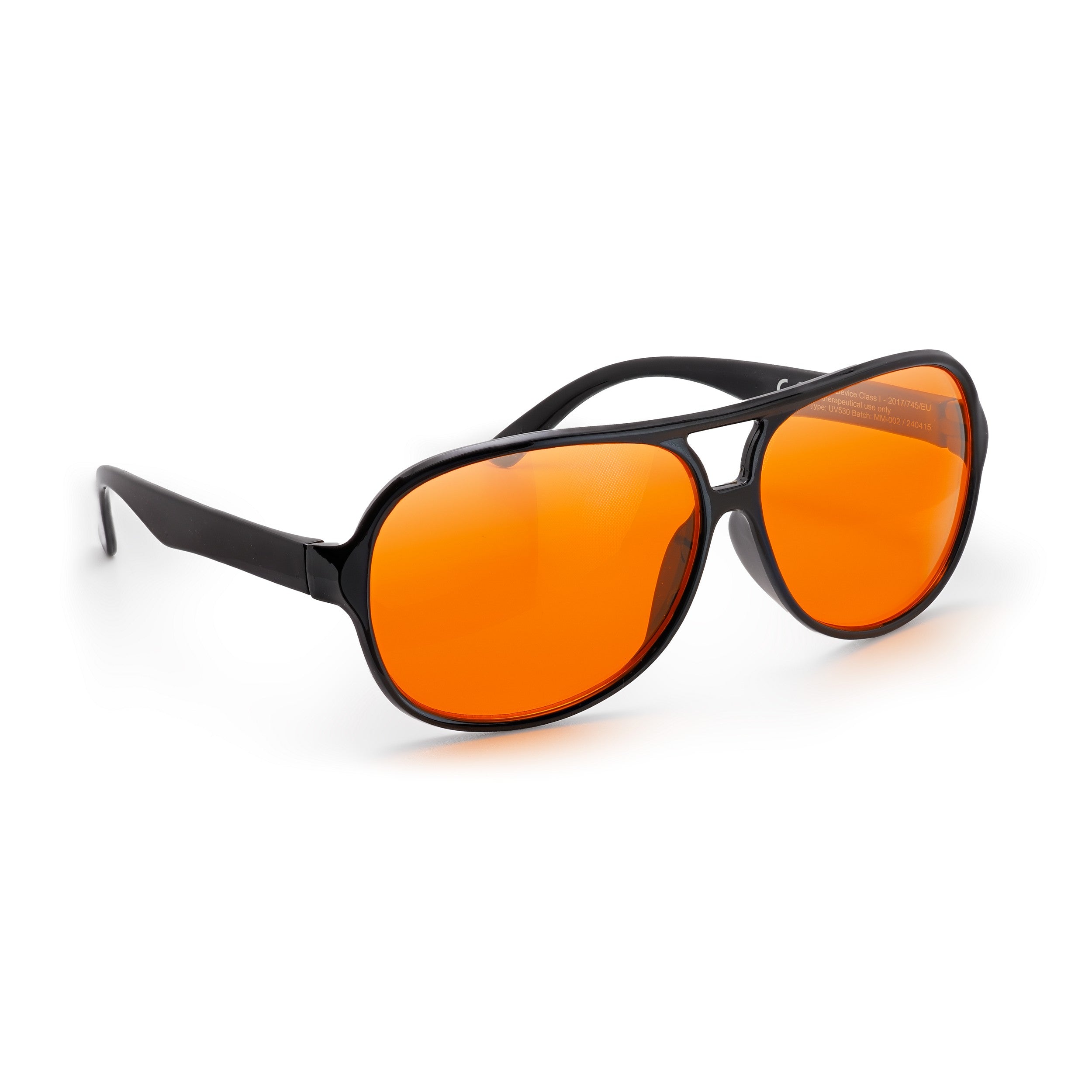
Some people, tired of insomnia, turn to sleeping pills. It's an easy but misleading solution — because it doesn't address the cause. Modern science is increasingly talking about a much healthier solution: blue-light-blocking glasses.
Sleep glasses, worn an hour or two before bed, allow your eyes to “feel” darkness even when there are screens or room lights nearby. This triggers the production of melatonin on time and your circadian rhythm to gradually reset. It’s like a gentle reminder to your body when nighttime is coming.
After a few days, people usually experience the same thing: they fall asleep easier, sleep deeply, feel rested in the morning, and their hunger becomes more stable during the day. This helps with natural weight loss because the body, having finally received rest, no longer requires quick calories.
For children, sleep is the most important of all "vitamins"
Children and teenagers today are sleeping too little — teachers, parents, and even the children themselves are seeing it. Five-year-olds need at least ten to twelve hours of sleep, ten-year-olds need nine to eleven, and teenagers need eight to ten.
However, the light from the screens they see right up until they fall asleep completely stops melatonin production and pushes the onset of sleep much later. As a result, the first lessons often pass as if in a haze, and learning abilities decline not because of laziness, but simply because of the physical state of the brain. If blue light is limited for a few days before bedtime, the melatonin cycle shifts to an earlier time, and the child wakes up more refreshed in the morning and is able to concentrate better. Here, sleep glasses become a practical solution that does not require any drastic changes.
When science talks about metabolism, it increasingly mentions… light
New research suggests that blue light at night affects not only sleep, but also metabolism. In one clinical study, people who wore sleep glasses at night for a month saw improvements in blood sugar levels, reduced insulin resistance, improved sleep, and even metabolic processes.
Even more interestingly, new research is revealing melatonin’s connection to brown adipose tissue, which is the body’s natural calorie-burning factory. Melatonin stimulates the activity of these fat cells and increases their ability to burn energy. This may be one reason why nighttime light and disrupted circadian rhythms are linked to the rising prevalence of obesity in modern societies.
The answer lies not on the plate, but in the hours of darkness
Weight loss is still often thought of as a matter of willpower. But a growing body of scientific evidence suggests that it’s a much more complex dance between hormones, circadian signals, and our own rhythms. Sleep is the main stage where it all begins and ends. When we get enough sleep and in the right dark environment, our bodies can finally do the work they were designed to do—burn fat, rebuild muscle, reduce inflammation, regulate blood sugar, and protect us from unnecessary calorie cravings.
Perhaps the biggest secret to modern health is quite simple: to lose weight, we must first learn to sleep well. And sometimes all it takes is one solution: bringing back the darkness to the evening.